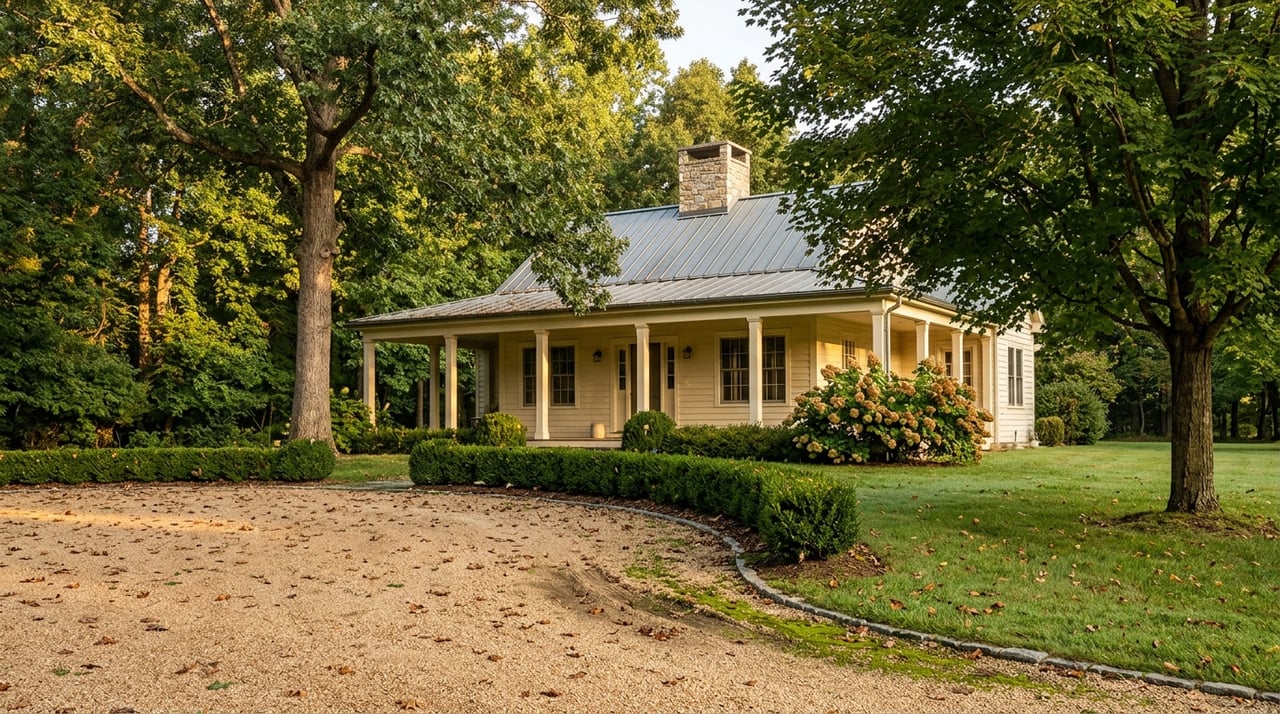
New Construction, Old Water: What Decides Well and Septic in East Hempfield Township
A buyer touring a brand new build off Route 283 in East Hempfield Township assumes the obvious: new house, new subdivision, public water and sewer like everything else nearby. Then the listing agent mentions the well and the septic tank, and the assumption falls apart. Meanwhile, an older resale a few miles closer to Route 30 already has a municipal sewer tap that's decades old.
Age of construction has nothing to do with it. What decides whether a home in East Hempfield Township runs on public utilities or on a private well and on-lot septic system is a zoning line, and that line was drawn to stay exactly where it is.
East Hempfield Township's zoning ordinance splits the township into zones, and two of them, the Agriculture Zone and the Rural Business Zone, sit outside what the township calls its Urban Growth Area. The ordinance's stated intent for the Agriculture Zone is to protect and promote farming outside that growth boundary, and it says so directly: public sewer and water utility services shall not be extended into the Agriculture Zone. Every use in that zone is required to provide its own on-lot sewer and water facilities instead. The Rural Business Zone, which allows small clusters of commercial and industrial uses alongside residential parcels in a rural setting, carries the identical restriction. You can read the full zoning language for both zones in East Hempfield Township's municipal code.
That single sentence, "shall not be extended," is doing more work in a purchase than almost anything else in the listing.
It's tempting to read a well and a septic tank on a newer home as evidence that infrastructure just hasn't caught up yet, the way a growing suburb sometimes waits years for a sewer line to reach its newest cul-de-sac. That's not what's happening here. The Agriculture Zone provisions were written to satisfy Section 604(3) of the Pennsylvania Municipalities Planning Code, which requires a zoning ordinance to be designed around preserving prime agricultural soils and existing farmland use. The ban on extending public utilities into these zones isn't an oversight waiting to be corrected as the township grows. It's the mechanism the ordinance uses to keep that land in agricultural and rural use rather than becoming the next phase of subdivision. Absent a rezoning of the parcel itself, a home outside the Urban Growth Area today will still be outside it in ten years, running the same well and the same on-lot system it started with.
That's the piece worth sitting with before you fall in love with a floor plan. On-lot status in East Hempfield isn't a temporary inconvenience. It's a permanent feature of the property, tied to where the lot sits on the map rather than to when the house was built.
Keystone Custom Homes is the most active builder currently working in East Hempfield Township, and its Hampton Heath community, now sold out, sat just off Route 283 with easy access to the Shoppes at Belmont and Park City Mall. Keystone has since pointed prospective buyers to a nearby follow-on community, Enclave at Independence Ridge. EC Custom Homes has also been active in the township, building communities like Haydn Manor, where new four-bedroom homes have listed under $700,000.
None of that tells you which utility system a given home sits on. A respected builder and a strong price point say nothing about which side of the Urban Growth Area a parcel falls on. Two homes from the same builder, a mile apart, can land in different zones entirely. The only way to know for certain is to ask which zoning district the specific parcel carries and whether that district sits inside or outside the growth boundary, not to infer it from the builder's name on the sign.
| Zone | Public water and sewer | What it means for a buyer |
|---|---|---|
| Inside the Urban Growth Area (residential and commercial zones) | Extended by right | Standard municipal connection and tap fees apply, as with most suburban East Hempfield homes |
| Agriculture Zone (outside the Urban Growth Area) | Prohibited by ordinance | The home relies on an individual well and on-lot septic system regardless of when it was built |
| Rural Business Zone (outside the Urban Growth Area) | Prohibited by ordinance | Same on-lot requirement applies, even where the parcel includes a small commercial use |
Once you know a home is on a private well and on-lot septic, the transaction itself runs differently than a home on municipal utilities, and the differences show up in financing, inspection, and disclosure.
Pennsylvania's Seller's Property Disclosure Statement requires sellers to state what they know about the age and condition of a well or septic system and any known failures, but it only covers what the seller actually knows. It isn't a substitute for testing, and a system can develop problems gradually without an owner ever noticing. East Hempfield also maintains its own On-Lot Sewage System Ordinance governing how these systems are installed and maintained, layered on top of Pennsylvania's Sewage Facilities Act of 1966, which requires a local Sewage Enforcement Officer to permit and inspect on-lot systems in every municipality that has them.
A standard home inspection does not evaluate a septic system. That requires a separate inspector, and Pennsylvania has no state law requiring septic inspectors to hold any particular credential, so anyone can call themselves one. The industry standard is certification through the Pennsylvania Septage Management Association, and it's what FHA and VA lenders typically require before they'll finance a home on a septic system. Expect the inspection itself to run $300 to $600 and to include a full tank pump-out as part of the process. If the home has sat vacant for more than seven days, the inspector may also require a hydraulic load test, a two-day process where clean water is run into the absorption area under load to confirm the drain field can still handle it, which adds both time and cost to the transaction.
Under Pennsylvania's standard agreement of sale, the buyer typically pays for the septic inspection itself, while the seller is responsible for locating, accessing, and emptying the on-lot system if the inspector requires it, then restoring the property afterward. Well water testing follows a similar split in practice. Pennsylvania doesn't require it for most conventional purchases, but FHA and VA loans almost always make it a condition of financing, and it's worth requesting even outside that requirement, since contaminants like nitrates, bacteria, arsenic, and PFAS have no taste, odor, or color that would otherwise tip you off.
One more test tends to ride along with these two. Lancaster County sits in a high radon zone, and radon requires its own separate air test, distinct from anything the septic or well inspections cover.
If a home is on a well now, could public water ever reach it later? Only if the parcel is rezoned into the Urban Growth Area or the boundary itself moves. Under the current ordinance, extending public utilities into the Agriculture or Rural Business zones isn't permitted, so it's reasonable to treat well and septic status as a lasting feature of the property rather than something the township will eventually resolve.
Does the on-lot requirement apply only to new construction? No. It applies to any use within those zones, which means older farmhouses on the same land are held to the identical requirement as a home built this year.
Who pays for the septic inspection and the well test? Under Pennsylvania's standard agreement of sale, the buyer generally pays for the inspection itself, while the seller covers locating, accessing, and emptying the on-lot system if the inspector needs it. Well testing costs are typically negotiated the same way and should be spelled out in your agreement before the inspection period begins.
A well and septic system isn't a red flag on its own. It's a different set of mechanics, and knowing which zone a property sits in before you fall for the floor plan changes how you time your financing, your inspection contingency, and your offer. If you're weighing a new build or a resale in East Hempfield Township and want a clear read on what's actually running underneath a specific address, Ian Hey and Associates can walk the parcel with you before you write the offer. Schedule a consultation and get the full picture, not just the one on the sign.
From finding the perfect Lancaster neighborhood to negotiating the best sale price, Ian Hey and Associates are with you from start to finish. We combine deep local knowledge with an unwavering commitment to our clients. Let us make your buying or selling experience an absolute success.

Ian Hey and Associates
[email protected]
(717) 940-7612
RE/MAX SmartHub Realty
930 Red Rose Ct
Lancaster, PA 17601